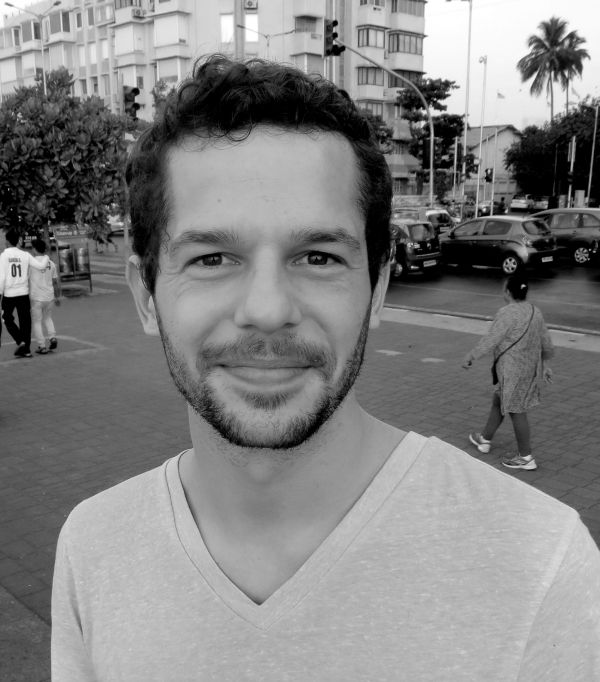
Dr. Chad Boda is an Associate Professor in environmental studies in the Unit for Built Environment and Environmental Studies at the Department of Urban Studies at Malmö University, Sweden. Chad is also research coordinator for the Green and Just Cities theme in the Institute for Urban Research at Malmö University. He received his bachelor's degree in Environmental Studies and Urban and Regional Planning from Florida State University, USA in 2010, his master's from Lund University in Environmental Studies and Sustainability Science, Sweden in 2012 and his PhD in Sustainability Science from Lund University Centre for Sustainability Studies in 2018. He received promotion to docent in 2023.
Chad’s research lays at the intersection of sustainable development, spatial planning, natural resource management and collective action/social movements, as well as maintaining a keen interest in philosophy of science and methodology in inter/trans-disciplinary research. He work gives special attention to competing conceptualizations of sustainable development and the repercussions these have for practice, possibility and political engagement of different social actors. His current research is focused on mapping the actors and strategies within the developing social movement around environmental restoration in southern Sweden and Baltic Denmark. His previous work has focused on topics including inter alia farmer based rural social movements in the sub-Saharan African countries of Ghana, Uganda and Zimbabwe, loss and damage from climate-related extreme events in the United States and sustainable coastal resource management in international contexts.
In addition to research, Chad is a highly involved interdisciplinary educator, covering topics including mainstream and ecological economics, social theory, physical and human geography, ecology, environmental management, environmental history, landscaoe studies and spatial planning. He is also program responsibility for the bachelor's program Environmental Studies: People, Environment and Society at Malmö University, and is supervising a number of PhD dissertations in the field of Urban Studies.
Sustainable development and other paradigms and concepts in the context of contemporary civilization trends – global and local dimensions
Organizers

- Department of Development Economics, Institute of Economics at the Faculty of Economics and Sociology, University of Lodz
- Department of City and Regional Management at the Faculty of Management, University of Lodz
-
Polish Association of Environmental and Natural Resource Economists
The conference is organized in cooperation with other European universities of the UNIC alliance (European University of Cities in Post-industrial Transition – UNIC 2.0), within thematic line no. 2 (TL2: Sustainability & green cities), taking into account related issues within other thematic lines such as: Urban resilience & smart cities (TL3), Health and wellbeing (TL6) and Justice, security and institutions (TL4).

About conference
Theoretical background of the conference
Implementing sustainable development in all its dimensions is a civilizational challenge today. Given the shifting dynamics and complexity of the geopolitical landscape, there is a need to re-evaluate established theoretical foundations and their practical applications. The academic community must now address the proliferation of development concepts in the social sciences, which lack rigorous theoretical validation and analysis of the reasons for their limited practical application.
These issues become particularly evident in the context of the development of cities and urbanized areas, especially post-industrial cities, where the search for new development patterns and the building of a city brand is accompanied by the need to address challenges arising from historical conditions.
The challenge remains to effectively combine social, economic, and environmental issues tailored to local circumstances, while simultaneously addressing global problems in accordance with the principle of "think globally – act locally." Experience to date suggests that awareness of the interdependence between socioeconomic systems and the environment remains insufficient. There is an urgent need for strategies that better integrate these spheres into decision-making processes, particularly regarding issues such as demographic change and social inequality, climate change and the degradation of natural ecosystems, digitalization and digital exclusion, shifts in the balance of geopolitical power, wars, and migration. Institutional governance and the effectiveness of organizational solutions at various decision-making levels also require reflection.
In particular, this concerns:
•The reasons for the limited effectiveness of sustainable development strategies at the supra-local level (requiring global cooperation) that result from social traps and limitations inherent to human and community evolution.
•The effectiveness of decision-making mechanisms regarding the use of multi-criteria methods to optimize strategic development directions at both local and global levels.
•The conditions for supporting planning and development decisions through the use of data and advanced artificial intelligence algorithms.
•The possibilities and limitations of using advanced methods of social participation to support decision-making at various levels of territorial unit development management.
- Sustainable development and alternative paradigms and concepts in the context of contemporary civilizational trends: global and local dimensions – a theoretical approach
- Global civilization challenges versus sustainable development
- Adaptation and resilience of natural, socio-economic systems in the context of sustainable development economics
- Sustainable development and green cities
- Human and social capital in sustainable urban development
- Residents’ prosperity and well-being in post-industrial cities – political and economic issues
- Ecosystem services in cities as a determinant of residents' well-being
- Cities and climate change
- The green energy transition in cities and regions
- Increasing urban resilience to challenges and threats in local and global environments
- The role of local authorities in the development of smart cities
- The role of business in the development of smart cities
- The circular economy and sustainable consumption and production
- Data collection and analysis for sustainable development
- The role of the financial sector in supporting sustainable development
- The role of the social sector in decision-making – opportunities, limitations, and challenges
- The green energy transition in cities and regions
Keynote Speakers
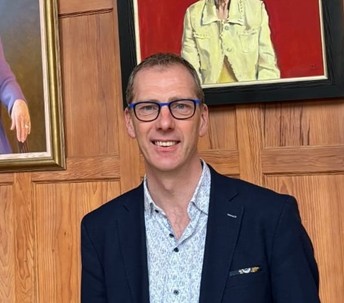
Edmond Byrne is Chair Professor of Process and Chemical Engineering at University College Cork (UCC), Ireland and a Principal Investigator at UCC’s Sustainability Institute.
His academic qualification include a BE in Chemical Engineering and MSc(Agr.) Food Science from University College Dublin, a PhD in Process & Chemical Engineering and MA in Teaching and Learning in Higher Education from University College Cork.
His research interests include transdisciplinary approaches around sustainability, sustainability narratives, and (engineering) education for sustainability. He Chaired the 10th Engineering Education for Sustainable Development conference (EESD2021) in Cork in 2021. As Discipline lead and Programme Director of the ME and BE(Hons) degrees in Process and Chemical Engineering at UCC, his research and teaching seeks to understand how best to put EESD learnings into practice.
He has researched and taught with colleagues from across the disciplines for over a decade and a half and has co-edited (with about a dozen academics from across the disciplines) two books: ‘Transdisciplinary Perspectives on Transitions to Sustainability’ (Routledge, 2017), and ‘Metaphor, Sustainability, Transformation: Transdisciplinary Perspectives’ (Routledge, 2021).
Professor Byrne leads an Irish Environmental Protection Agency (EPA) funded project Deep Societal Innovation for Sustainability and Human Flourishing (DSIS) [https://www.ucc.ie/en/dsis/]. This transdisciplinary project seeks to develop a new methodology for conceptualising deep whole-of-society transformation for a trajectory towards authentic sustainability and human flourishing, in response to the current 'polycrisis'/'metacrisis', which manifest at once at local, supra-local and national/international levels. In considering the above, DSIS considers a number of six inter-connected institutional pillars: politics, economics, technology, gender, education and religion. A forthcoming book, ‘Restoring the Sacred Ordinary in Everyday Life: Secular and Spiritual Responses to Contemporary Crises’ (Bloomsbury, 2027), emanated from a recent DSIS workshop in Cork.
He also is involved in a transdisciplinary project alongside anthropologists, geographers and artists, investigating the power of story, narrative, myth and art in transformative systemic change, in particular in the context of local, rural and isolated communities.
Conference councils
- Prof. Mariusz Sokołowicz, associate professor, Dean of the Faculty of Economics and Sociology of the University of Lodz, POLAND
- Prof. dr hab. Ewa Walińska, professor, Dean at the Faculty of Management of the University of Lodz, Head of the Department of Accounting, Lodz, POLAND
- Dr Paul Bolger, Head of UCC Sustainability Academy, University College Cork, Cork, IRELAND
- Prof. Nina Begičević Ređep, Ph.D., full professor with tenure, Laboratory for Strategic Planning and Decision Making - Head, Department of Organization, Department of Quantitative Methods - associate member, University of Zagreb, Zagreb, CROATIA
- Agata Fortuna, project and training coordinator, Koç University Social Impact Forum (KUSIF); Koç University, Istanbul, TÜRKIYE
- Prof. Per Hillbur, associate professor in environmental science, Department of Urban Studies, Faculty of Culture and Society, Malmö University, Malmö, SWEDEN
- Prof. dr. sc. Martina Jakovčić, Vice Dean for Finances and Operations, Faculty of Science, University of Zagreb, Zagreb, CROATIA
- Prof. Dr. Andreas Löschel, professor, Chair of the department of Environmental/Resource Economics and Sustainability, Ruhr University Bochum, Bochum, GERMANY
- Dr hab. Edyta Łaszkiewicz, prof. UŁ Faculty of Economics and Sociology of the University of Lodz, POLAND
- Prof. dr hab. Monika Marcinkowska, Faculty of Economics and Sociology of the University of Lodz, POLAND
- Dr hab. Bożena Matusiak, associate professor, Head of the Centre for Sustainable Development Studies at the Faculty of Management, University of Lodz, Lodz, POLAND
- Dr hab. Janusz Reichel, associate professor, Department of City and Regional Management, Faculty of Management, University of Lodz, Lodz, POLAND
- Prof. Roberto San Salvador Del Valle Doistua, professor, Director – Deusto Cities Lab Chair, University of Deusto, Bilbao, SPAIN
- Dr. Andreas Abecker - Disy Informationssysteme GMBH Grmany
- Prof. Dr. Hans-Knud Arndt - Otto-von-Guericke-Universität, Magdeburg, Germany
- Prof. SGH, dr hab. Paweł Bartoszczuk - Warsaw School of Economics, Poland
- Prof. Dr Ing. Grit Berens – University of applied Sciences and arts Bilefeld, Germany
- Prof. WSB, dr hab. Arnold Bernaciak - WSB Merito University in Poznan, Poland
- Prof. dr hab. Tadeusz Borys - University of Zielona Gora, Poland
- Prof. PB, dr hab. inż. Elżbieta Broniewicz - Bialystok University of Technology, Poland
- Prof. dr hab. Stanisław Czaja - Wroclaw University of Economics and Business, Poland
- Prof. UŁ, dr hab. Justyna Danielewicz - University of Lodz, Lodz, Poland
- Prof. dr hab. Józefa Famielec - University of Management and Banking in Krakow, Poland
- Prof. Dr. Ing. Frank Fuchs-Kittowski - Hochschule für Technik und Wirtschaft Berlin, University of Applied Sciences Berlin, Germany
- Dr Achim Guldner - Trier University of Applied Sciences, Environmental Campus Birkenfeld, Germany
- Prof. dr hab. Bogusław Fiedor - Wroclaw University of Economics and Business, Poland
- Prof. Dr Barak Fishbein - Technion – Israel Institute of Technology, Israel
- Prof. dr hab. Andrzej Graczyk - Wroclaw University of Economics and Business, Poland
- Prof. Dr Ing. Jorge Marx Gomez - Carl von Ossietzky University of Oldenburg, Germany
- Prof. dr hab. Kazimierz Górka - Professor Emeritus Krakow University of Economics, Poland
- Prof. Dr Klaus Greve - University of Bonn, Germany
- Denis Havlik - Austrian Institut of Technology (AIT), Austria
- Friedhelm Hosenfeld – DigSyLand, Germany
- Maximilian Höb - Leibniz Supercomputing Centre (LRZ) of the Bavarian Academy of Sciences and Humanities, Germany
- Dennis Junger - Hochschule für Technik und Wirtschaft Berlin, University of Applied Sciences Berlin, Germany
- Prof. UMCS, dr hab. Agnieszka Karman, Maria Curie-Sklodowska University, Lublin, Poland
- Prof. Dr Kostas Karatzas - Aristotle University of Thessaloniki, Greece
- Prof. Dr Ralf Klischewski – German University in Cairo, Egypt, Germany
- Prof. UEW, dr hab. Karol Kociszewski, Wroclaw University of Economics and Business, Poland
- Prof. Dr Dieter Kranzlmüller - Leibniz Supercomputing Centre (LRZ) of the Bavarian Academy of Sciences and Humanities, Germany
- Horst Kremers - Horst Kremers UNDRR SEM - RIMMA CoE Community, Germany
- Prof. dr hab. Barbara Kryk - associate professor, University of Szczecin, Poland
- Prof. Dr Patricia Lago - Vrije Universiteit Amsterdam (VU), the Netherlands
- Prof. dr hab. Elżbieta Lorek, Academia Humanitas, Sosnowiec, Poland
- Dr Margaret M. MacDonell - Argonne National Laboratory, USA
- Prof. dr hab. Krzysztof Malik, Opole University of Technology, Poland
- Dr hab. Marek Matejun - University of Lodz, Lodz, Poland
- Prof. dr hab. inż. Rafał Miłaszewski, Professor Emeritus Cardinal Stefan Wyszynski University in Warsaw, Poland
- Prof. UŁ, dr hab. Urszula Motowidlak - University of Lodz, Poland
- Prof. UPP, dr hab. Karol Mrozik - Poznan University of Life Sciences, Poland
- Prof. Dr Stefan Naumann - Trier University of Applied Sciences, Germany
- Dr Benoît Otjacques - Luxembourg Institute of Science and Technology, Luxembourg
- Prof. UPP, dr hab. Dariusz Pieńkowski - Poznan University of Life Sciences, Poland
- Prof. Dr Ing. Anna Ramzy - German University in Cairo, Egypt
- Dr Agata Rudnicka-Reichel - University of Lodz, Lodz, Poland
- Dr Izabela Różańska-Bińczyk - University of Lodz, Lodz, Poland
- Prof. Dr Rüdiger Schaldach - University of Kassel - Center for Environmental Systems Research, Germany
- Prof. Dr Benno Schmidt - Bochum University of Applied Sciences, Germany
- Dr Dorota Sikora-Fernandez - University of Lodz, Poland
- Prof. Dr. Ing. Heiko Thimm - Hochschule Pforzheim, Germany
- Prof. Dr Ing. Benjamin Wagner vom Berg - University of Applied Sciences Bremerhaven, Germany
- Prof. Dr. Andi H. Widok - Hochschule für Technik und Wirtschaft Berlin University of Applied Sciences Berlin, Germany
- Dr. Martina Willenbacher - Hochschule für Technik und Wirtschaft Berlin (HTW Berlin) - University of Applied Sciences Berlin, Germany
- Prof. Dr Andreas Winter - University of Oldenburg Germany
- Dr Magdalena Wiśniewska - University of Lodz, Lodz, Poland
- Prof. Dr. Ing. Jochen Wittmann - Hochschule für Technik und Wirtschaft Berlin (HTW Berlin) - University of Applied Sciences Berlin, Germany
- Prof. Dr. Volker Wohlgemuth - Hochschule für Technik und Wirtschaft Berlin (HTW Berlin) - University of Applied Sciences Berlin, Germany
- Anna Zagorski - Umweltbundesamt – German Environment Agency, Germany
- Dr Wojciech Zbaraszewski, West Pomeranian University of Technology in Szczecin, Poland
- Prof. dr hab. Tomasz Żylicz, University of Warsaw, Poland
- Dr hab. Małgorzata Burchard-Dziubińska, associate professor, Department of Development Economics at the Faculty of Economics and Sociology, University of Lodz, Lodz, Poland
- Dr hab. Dominik Drzazga, assistant professor, leader of TL 2: Sustainability & green cities within UNIC 2.0 alliance; Department of City and Regional Management at the Faculty of Management, University of Lodz, Lodz, Poland
- Dr. Eng. Grit Behrens, Hochschule Bielefeld – University of Applied Sciences and Arts, Minden Campus, Germany
Conference venue
First day 10th September 2026
Faculty of Economics and Sociology, University of Lodz; 3/5 Polskiej Organizacji Wojskowej Street, 90-255 Lodz, POLAND
Second day 11th September 2026
Faculty of Management, University of Lodz, 22/26 Jana Matejki Street, 90-237 Lodz, POLAND
Rules and regulations Of the scientific conference
Key Dates
15 June 2026 - the deadline for online registration for participation in the Conference. The deadline has been extended until the end of July!
15 June 2026 - the deadline for submitting the abstracts. The deadline has been extended until the end of July!
15 August 2026 - the deadline for the Scientific Committee to evaluate abstracts. The deadline has been extended until 15th of August!
15 July 2026 - final deadline for payments. The deadline has been extended until 15th of August!
10-11 September 2026 - the Conference
Conference fee
Standard - 250 EUR
Reduced (applies to students and doctoral candidates) - 150 EUR
The conference fee must be paid by 15 July 2026 to the following account:
University of Łódź, Bank Pekao S.A., II o/Łódź
account number (IBAN): PL14 1240 3028 1978 0011 6527 2246
BIC (Swift) PKOPPLPW
transfer title: "SD 26 and participant's first and last name".
Conference participants from UNIC member universities are exempt from the conference fee. They are responsible for their travel, accommodation, and publication costs.
Publication Opportunities
Conference participants have several publication options. Texts must meet the editorial requirements of individual publishers and will be subject to standard publishing procedures. The conference fee does not cover publication costs.
This book explores the latest advancements in applied informatics, environmental informatics, and environmental economics, along with relevant sustainability practices. It focuses particularly on the topic of 'Sustainable development and other paradigms and concepts in the context of contemporary civilisation trends — global and local dimensions'. Chapters should concern the key elements needed to shape a greener future, while also emphasising the transformative potential of digital tools and data-driven strategies for tackling environmental issues that transcend geopolitical boundaries. The book examines how digital inclusion can empower communities, enhance decision-making, and promote sustainable development on a global scale, addressing issues such as climate change, biodiversity loss, water scarcity, and pollution. It also explores the economic and societal aspects of environmental research, including environmental economics and informatics. As an essential resource for researchers, professionals, and policymakers interested in using ICT to address urgent environmental issues and achieve sustainable development, the book offers valuable insights, thought-provoking discussions, and innovative approaches to building a sustainable, eco-friendly digital society aligned with the global Sustainable Development Goals.
Accepted full papers will be published in the Springer book series “Progress in IS, Advances in Environmental Informatics”. The Scope of Full Paper contributions is 15 plus/minus 2 pages. These papers will be peer reviewed on the basis of your submitted paper.
Accepted short or work-in-progress papers will be published in “Lecture Notes in Informatics (LNI), Proceedings - Series of the Gesellschaft fur Informatik (GI)”. The Scope of this paper's contribution is 8 pages plus/minus 2 pages. These papers will be peer reviewed on the basis of your submitted paper.
Partners
Program
Contact
Office
Jolanta Hrdina-Rzeźniczak
E-mail address: conferencesd@uni.lodz.pl
Department of Development Economics
Rewolucji 1905 r. 41/43
90-214 Łódź
Tel. +48 42 635 51 61
Walking tour
As part of the conference programme, we are pleased to offer you the opportunity to take part in a walking tour. There are two options to choose from:
- 1-hour tour: a walk around the immediate vicinity of the Faculty of Economics and Social Sciences, including the New Centre of Łódź, in particular the Łódź Fabryczna railway station and EC1 – examples of recent investments in area revitalisation and giving new functions to post-industrial buildings
- 2.5-hour tour: a walk along Włókiennicza Street to Piotrkowska Street, Wolności Square, Staromiejski Park and (only visible from a distance) Manufaktura. A story about area revitalisation, 19th-century urban planning in Łódź, the dramatic history of World War II and the Łódź ghetto, the approach to urban greenery in Łódź, and art in the city space (Pasaż Róży)
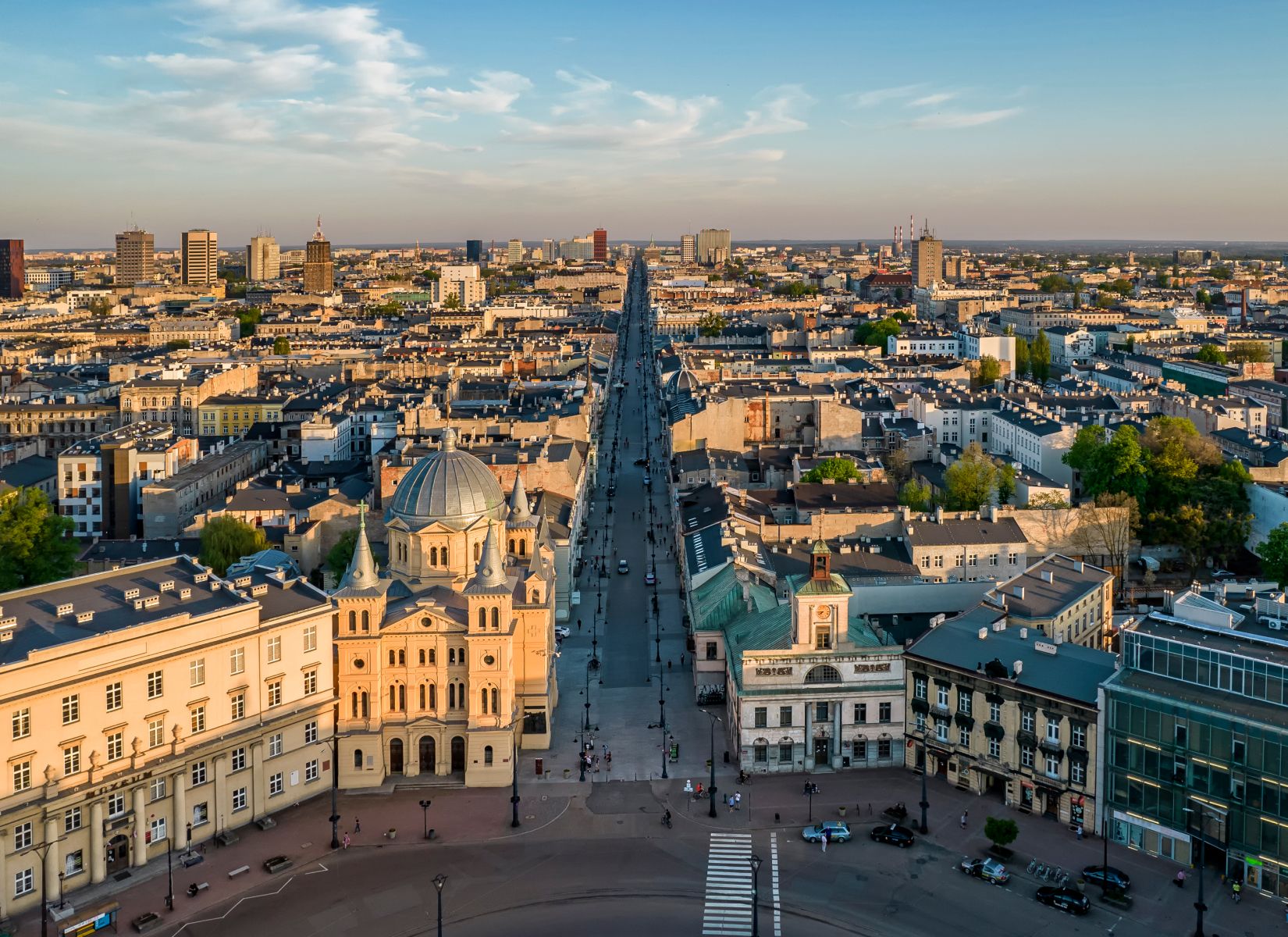
Łódź is a city of contrasts which intrigues almost at every step. It is full of factories and, at the same time, it is very green; eclectic but also avant-garde. Łódź dazzles with the lavishness of factory owners’ palaces and astonishes with artistic installations.
https://lodz.travel/en/tourism/why-lodz/
Zdjęcie: Magazyn Travelist
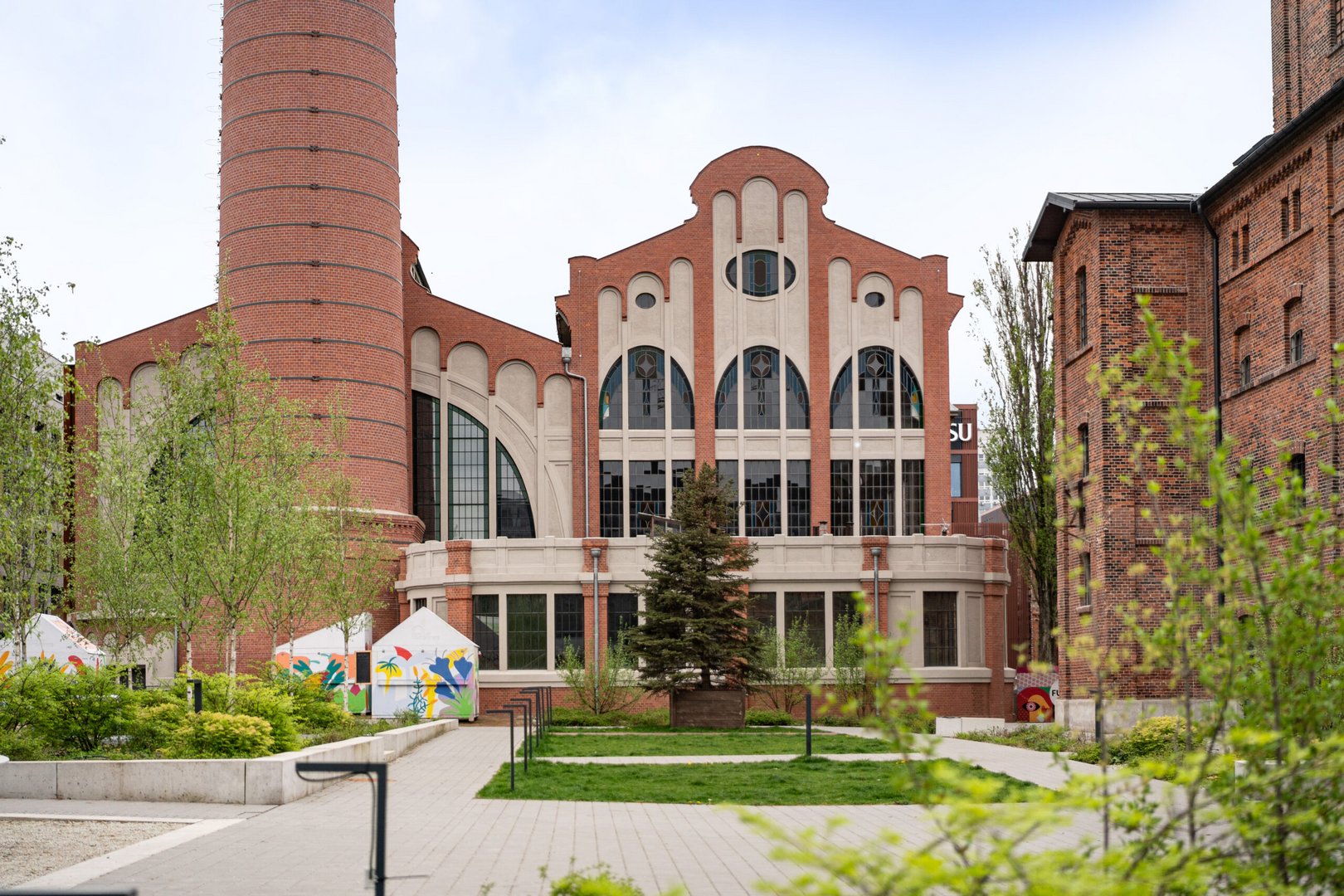
Fuzja is a new meeting place created in the heart of Łódź by Echo Investment and Archicom. It combines historical, industrial fabric with modern architecture. It is a “destination place” full of people and greenery, offering space for meetings, work, and unique experiences.
Zdjęcie: Fuzja Echo
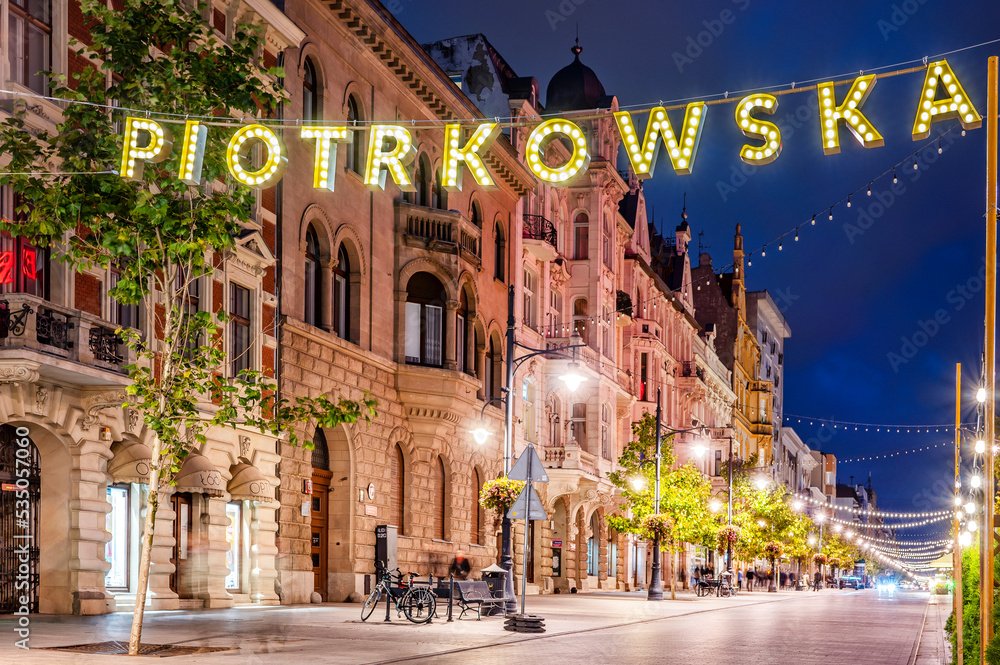
One of the most renowned streets in the country and also the longest Polish promenade is a symbol of the city.
https://lodz.travel/en/tourism/what-to-see/piotrkowska-street/
Zdjęcie: Adobe Stock

The cultural program is included in the conference costs. Detailed information will be provided at a later date, but now we invite you to spend time together, visit, taste and learn about the attractions of Łódź after the conference debates!
Zdjęcie: Stare Kino